For many manufacturing processes, a simple pneumatic dispensing machine is the starting point. They are affordable, flexible, and capable of surprisingly good repeatability. We sell 100’s of them. But as production demands increase, you can discover the limits of basic time/pressure dispensing. Materials string or drip. Dispense volumes begin to vary with temperature changes. Reactive adhesives cure inside the fluid path. Suddenly, what looked like a simple process becomes inconsistent, messy, and difficult to control.
This is exactly where pneumatic dispensing valves come into their own. As discussed in our white paper Improving Industrial Dispensing with Pneumatic Dispensing Valves, manufacturers typically move to dispensing valves when they need greater accuracy, improved automation capability, better handling of challenging materials, or support for higher production volumes. Our new Fisnar VD520 Diaphragm Dispensing Valve is designed specifically for these more demanding dispensing environments.
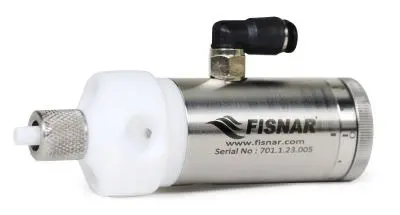 The VD520 uses a diaphragm-based design that isolates the fluid path from the actuator mechanism. In many other types of dispensing valves, the fluid comes into direct contact with moving internal components and seals. That can create problems with reactive chemistries such as cyanoacrylate adhesives, anaerobic materials, UV curable adhesives, solvents and aggressive chemicals. The VD520 addresses this by separating the wetted fluid path from the pneumatic actuator section, helping reduce contamination, maintenance and premature curing inside the valve.
The valve is also engineered for process control rather than simple “on/off” dispensing. Flow rate can be fine-tuned using the stroke adjustment mechanism, allowing you to optimise dispense size and responsiveness for different applications. The unrestricted material flow path helps reduce turbulence and microbubble formation, which can become critical in electronics assembly, optical bonding, medical device manufacturing, or any application where trapped air can create downstream reliability issues. Fast response and positive shutoff also support automated dispensing environments where repeatability matters more than raw flow rate.
Available in both PTFE and stainless steel fluid body configurations, the Fisnar VD520 Diaphragm Dispensing Valve can be matched to a wide range of industrial fluids and chemistries. The PTFE version is especially suited to reactive materials where chemical inertness matters, while the stainless steel version offers durability for broader industrial dispensing applications. This makes the valve suitable for electronics manufacturing, medical device assembly, optics, laboratory production environments, and other applications where process consistency and material compatibility are important.
Dispensing problems are often blamed on the material itself, when the real limitation is the dispensing method. The right valve can improve process stability, reduce downtime and make automated dispensing far more predictable. If you are working with reactive, low viscosity or difficult-to-control fluids, speak to us about evaluating the Fisnar VD520 for your application.
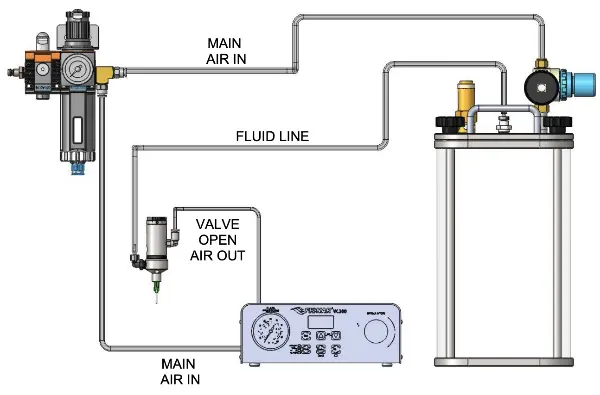
The VD520 Diaphragm Dispensing Valve is a standard choice for dispensing cyanoacrylate adhesives. Here is a typical setup with a suitable reservoir.