Henry Ford is credited with saying, “If you need a machine and don’t buy it, then you will ultimately find that you have paid for it, but don’t have it.”
I am sure you have heard this before. Yet when it comes to capital investment, are we still more concerned about the cost of buying the machine than the cost of going without it?
We all know the arguments for automation. Better productivity, more consistent quality, reduced waste, improved efficiency. None of this is news. Yet, according to the International Federation of Robotics World Robotics 2025 report, the UK has just 104 industrial robots per 10,000 manufacturing employees, against a global average of 132. We rank 24th in the world.
 Given the competitive pressures facing UK manufacturers, shouldn’t we be doing better?
It’s understandable that businesses are cautious about capital expenditure. Costs (including labour) are rising, margins are under pressure, and confidence in the economy isn’t exactly buoyant. But there’s a danger that caution becomes a habit. We scrutinise the risks of investing, sometimes without giving the risks of not investing the same attention.
We see this in dispensing applications. Adhesives, sealants, potting compounds and other materials are still being applied manually in processes that could benefit from automation. And the investment is often much more modest than people expect, with dispensing robots starting at around £6,000.
Of course, not every process justifies a robot. But the decision should be based on the economics and performance of the application, including the cost of continuing as we are. That might mean wasted material, inconsistent quality, constrained throughput or simply opportunities for growth that can’t be taken.
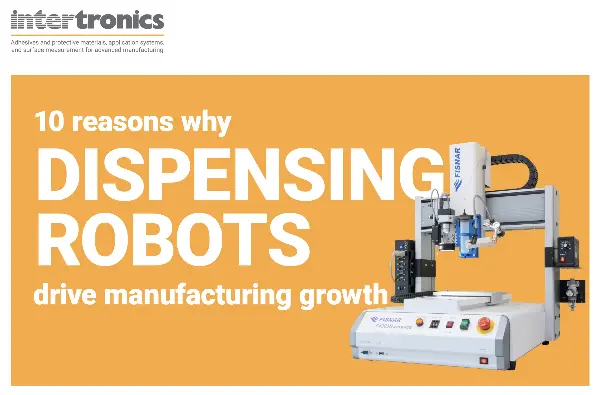
We’ve put together a short guide, 10 reasons why dispensing robots drive manufacturing growth, looking beyond the familiar productivity arguments to explore the wider business case for investment. It covers costs, payback, flexibility, health and safety, and some of the less obvious benefits of automation.
Henry Ford’s point remains as relevant as ever. Sometimes the bigger risk is doing nothing.
