- Products
- Industries
-
-
-
Industries
Browse industry-specific solutions for bonding, coating, and dispensing. Find proven materials and manufacturing technology tailored to your exact requirements.
-
-
-
- Knowledge centre
- News and insights
- About us
-
-
-
About Intertronics
Get a clearer view of the team, facilities and standards behind the technical support offer.
-
-
-
- Contact us
Customer
When Starbound Labs’ drones began suffering adhesive failures during flight trials, the obvious conclusion might have been that cyanoacrylate was the wrong adhesive technology. It wasn’t. Starbound turned to adhesives specialist Intertronics to find the right cyanoacrylate adhesive for a drone flying outdoors in demanding conditions. The resulting collaboration went beyond adhesive selection, helping Starbound improve the product, reduce development risk and accelerate its path to flight certification.
Customer benefits
- Environmental resistance, flexibility, and toughness for demanding outdoor conditions
- Less brittle than conventional cyanoacrylate adhesives
- Low odour, low bloom with fast cure and transparent bond lines
- Resistant to 85°C/85% RH for up to 1,000 hours
Lightweight drone design and demanding flight conditions
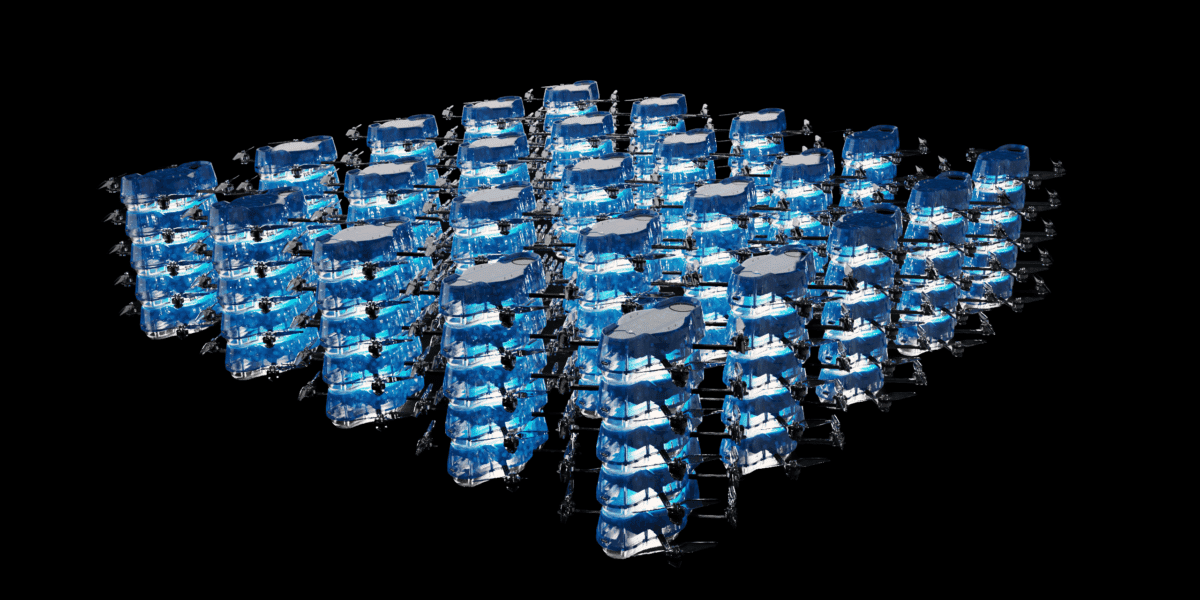
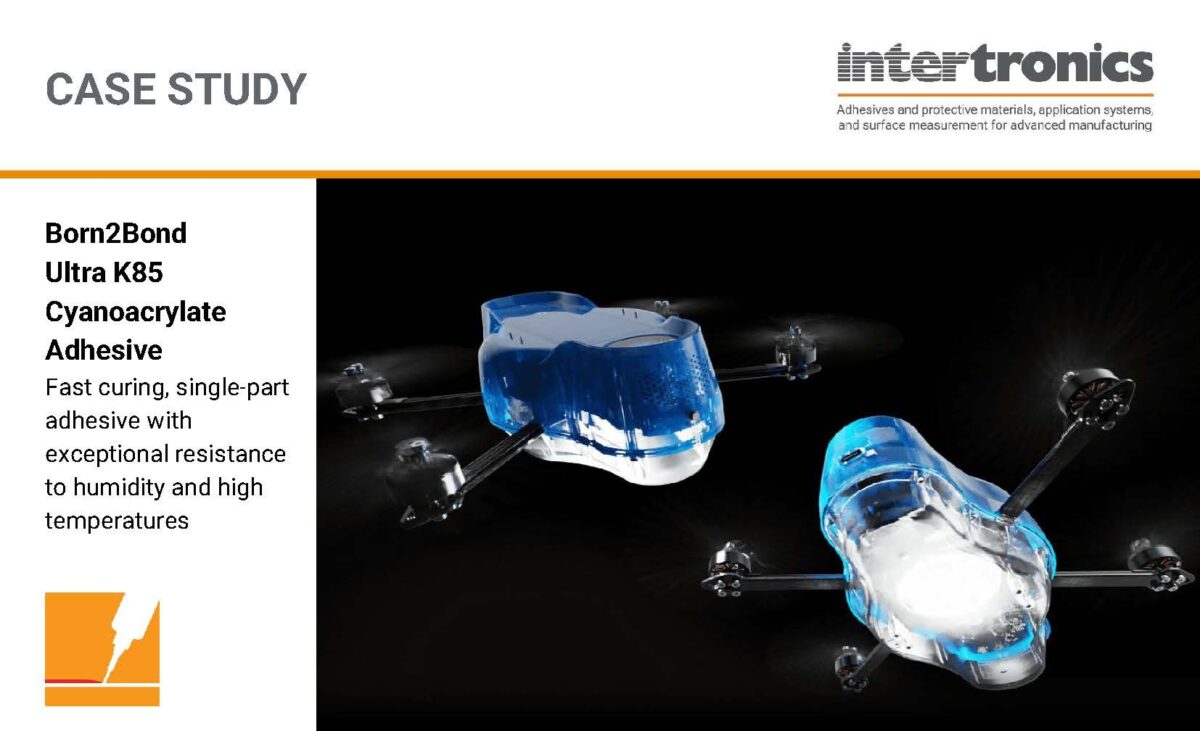
Starbound Labs’ drone technology, flying in formation in their hundreds for crowd entertainment, offers a different proposition to most. Their drones weigh 285 grams against the industry standard 400-800 g, and take 20 minutes to charge versus 90 minutes. A real-time kinematic (RTK) custom antenna design weighing less than five grams gives centimetre-level positioning accuracy relative to a base station.
“In our latest design, the rapid charging and integrated on-board display for troubleshooting and real-time diagnostics is one of our strengths,” said Dan Aljassas, Product Designer at Starbound Labs. “But the trouble we had with securing electronic components through extreme flight conditions was a major roadblock in development. We found that the off-the-shelf cyanoacrylate adhesives we were using failed in flying trials and we needed something different.”
While Starbound Labs has earned Federal Aviation Administration (FAA) flying approval in the United States, where its main business has been established, Civil Aviation Authority (CAA) approval in the UK requires drone designs to be fixed and final before certification. To resolve the bonding challenge, Aljassas and his colleagues turned to Intertronics for specialist adhesives and process expertise.
More than adhesive selection
After learning about Starbound’s design progress and requirements, Lead Applications Specialist Craig Geerthsen hosted its engineers at Intertronics’ Technology Centre in Kidlington, Oxfordshire to explore adhesive options.
“Cyanoacrylate adhesives are among the world’s most widely used adhesive technologies, available in hundreds of brands and formulations. But they are not all the same, or designed for the same applications. Low-cost, general-purpose cyanoacrylate adhesives (CAs) can struggle to bond low surface energy plastics such as the polypropylene (PP) used in the drone design, resulting in poor wetting and weak adhesion,” said Geerthsen. “Many general-purpose formulations are relatively brittle and inflexible, and are not intended to provide the environmental resistance needed for demanding outdoor applications.”
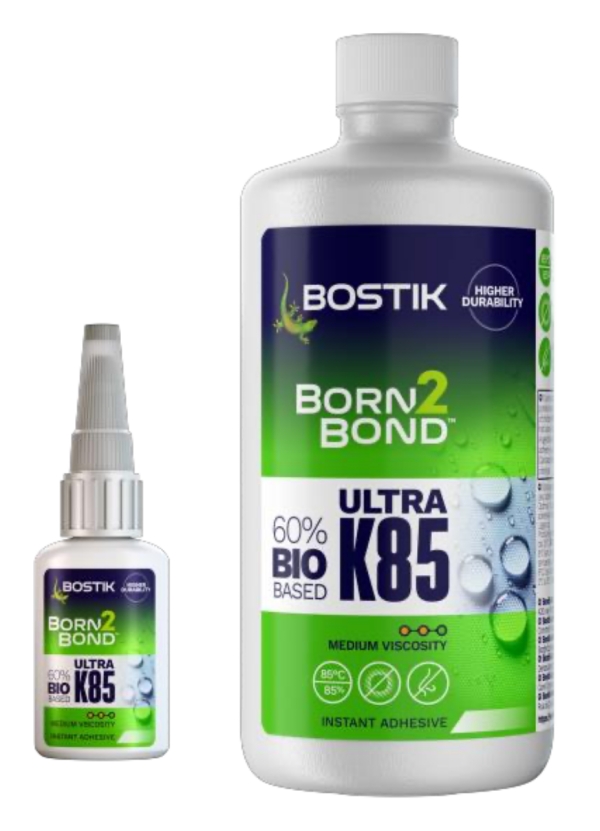
Geerthsen and Aljassas tested several different industrial grade adhesives on Starbound’s substrates of PP and coated glass, eventually settling on the Born2Bond Ultra K85 cyanoacrylate adhesive.
“Born2Bond Ultra K85 offered the environmental resistance, flexibility and toughness Starbound needed for demanding outdoor conditions,” said Geerthsen. “It provided a more robust solution for the materials being bonded and the mechanical and environmental demands of the application.”
Starbound Labs carried out environmental testing in Texas, USA, flying in temperatures above 40°C and humidity over 90 per cent. The drone performed well, instilling confidence in its engineering team that they’d found the right adhesive.
“Intertronics’ investment in finding the right solution really impressed us,” said Aljassas. “The visit to the Technology Centre really sold us on the depth of their technical expertise, but I hadn’t expected their knowledge of manufacturing too. Seeing the control you can exercise over adhesive bead size and height with automated dispensing was impressive.”
“As well as narrowing down the adhesive options, we reviewed the bond line geometry between the canopy and diffuser components to help improve process repeatability,” explained Geerthsen. “We suggested ways to optimise surface preparation and highlighted where increasing the effective bonding area could improve bond performance.”
Following these discussions, Starbound’s engineers modified the mould tooling for the drone body to improve the seal between the canopy and diffuser. They also increased the available bonding area around the USB charging points and housing to improve adhesion.
Bonding is best considered before a product design and production process are fixed. By involving Intertronics early, Starbound’s engineers were able to consider bond line geometry, surface preparation and adhesive application while changes were still relatively straightforward to make, helping to reduce development risk and accelerate progress towards production.

Aiming for the stars
As Starbound refines its design to move forward and obtain CAA approval, Intertronics continues to work closely with Starbound’s team.
“As Starbound moves towards higher production volumes, there may be opportunities to introduce more controlled adhesive dispensing to improve consistency and repeatability,” said Geerthsen. “Our role is to continue supporting the team with the bonding process as production develops.”
“Getting Intertronics’ insights before we finalised the design has taken months off this development phase,” said Aljassas. “They’ve made a major difference to our business growth prospects.”