

Radiometers and process control

Dymax UV and visible light radiometers are simple to operate and allow operators to monitor and document a UV or visible light curing process. Regular measurement helps you ensure that the curing system provides the intensity and dose required for successful, repeatable curing.

A low intensity measurement can indicate that a bulb, reflector or lightguide needs attention. Degradation of these components can reduce the energy reaching the cure site and may result in incomplete cures.

Radiometers can also measure light transmitted through substrates and detect stray or reflected UV energy. These measurements can help validate the curing process and assess whether operators are properly shielded from UV exposure.
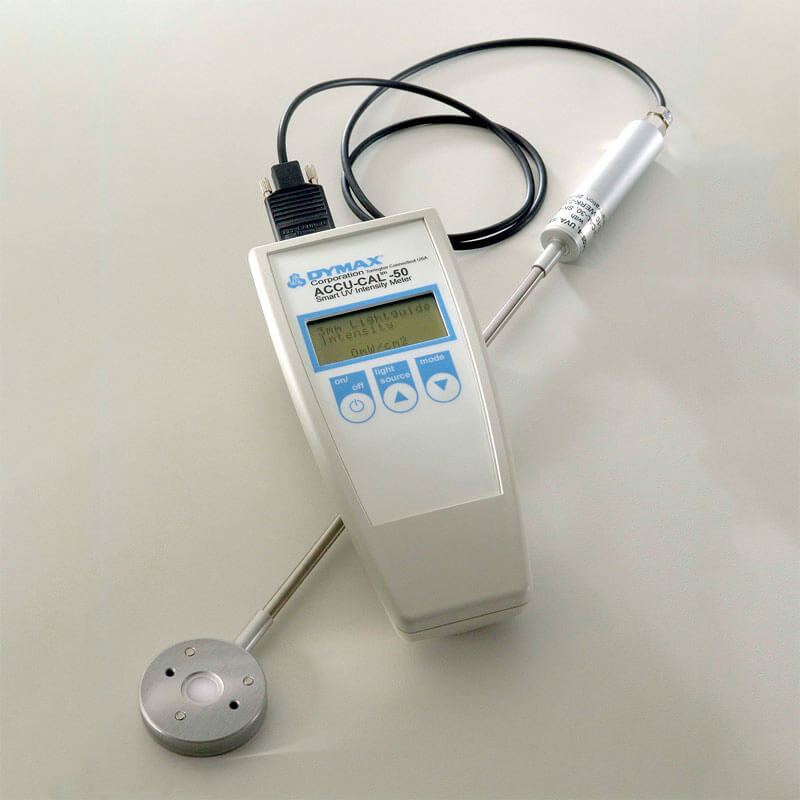
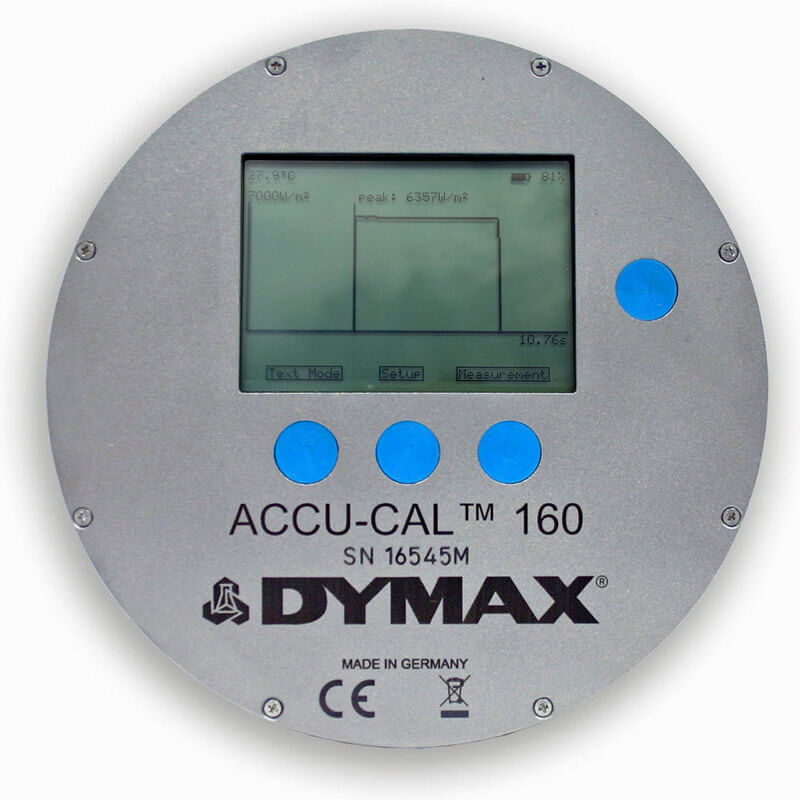
ACCU-CAL 50 UV Radiometer Smart UV Intensity Meter
More about Radiometers and Process Control

Maintaining a reliable light-curing process

A radiometer helps to ensure that a light-curing system is providing the intensity and dosage levels required for successful curing. Regular measurements can identify changes in system performance before they affect the process.

Assessing operator UV exposure

ACCU-CAL™ radiometers are sufficiently sensitive to measure the intensity of stray or reflected energy (as little as 1 mW/cm2). Dymax recommends that worker UVA exposure not exceed 1 mW/cm2. For reference, UV (320-395 nm) intensity on a sunny day can range from 2-6 mW/cm2.

Measuring transmission rates through substrates

A radiometer can be used to measure the transmission rates of various wavelengths through substrates that sometimes absorb various frequencies of energy. To assure an effective curing process it is critical to measure the light intensity reaching the cure site below any intervening substrate.

Reset
1 - 2 of 2 results
