Browse industry-specific solutions for bonding, coating, and dispensing. Find proven materials and manufacturing technology tailored to your exact requirements.
A structural adhesive is an adhesive which “hardens” or cures into a material capable of holding two or more substrates together, bearing the forces involved for the lifetime of the product. It is often termed a “load-bearing” adhesive. The product may undergo shock, vibration, chemical exposure, temperature excursions or many other types of potentially weakening or destructive agents, and still be bonded. The substrates may be the same, or quite different, ranging from metals, plastics, glass, rubbers, ceramics or composites. The parts may be under constant load, or intermittent loads and shocks. A structural adhesive should have proven reliability in applications in which the bond can be successfully stressed to a high proportion of its maximum failing load for long periods.
Chemistries
Industry generally considers adhesives made from epoxy or methyl methacrylate (MMA) chemistries to be the leading contenders when a structural adhesive is required. Both offer strong bonds to a plethora of substrates, and are often supplied as two-part products in convenient cartridge packaging. Other choices would definitely include two-part polyurethane adhesives, and UV light curing acrylic adhesives. Conventional cyanoacrylate adhesives (CAs) and reactive hotmelt adhesives would find their structural applications limited by factors like temperature resistance and overall bond strength.
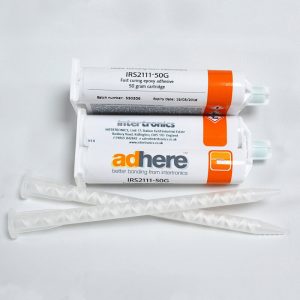
Figure 1 – a typical two-part epoxy structural adhesive
Selection
Adhesive selection is always a matter of trade-offs. To get the very high strength of an epoxy adhesive, you may need to accept a relatively slow cure at room temperature, or cure faster at elevated temperatures. Two-part methyl methacrylate adhesives offer strong bonds to a wide range of substrates, but sometimes the working life once mixed is too short unless you are in continuous production with short time gaps between each part. Light curing UV adhesives can be high strength and really quick (seconds), but applications are generally confined to those with a completely visible bondline.
Cyanoacrylate adhesives
The familiar cyanoacrylate adhesive cures “instantly” and with good bond strength, but that strength is readily compromised by temperature and moisture/humidity, which limits their use for load-bearing applications.
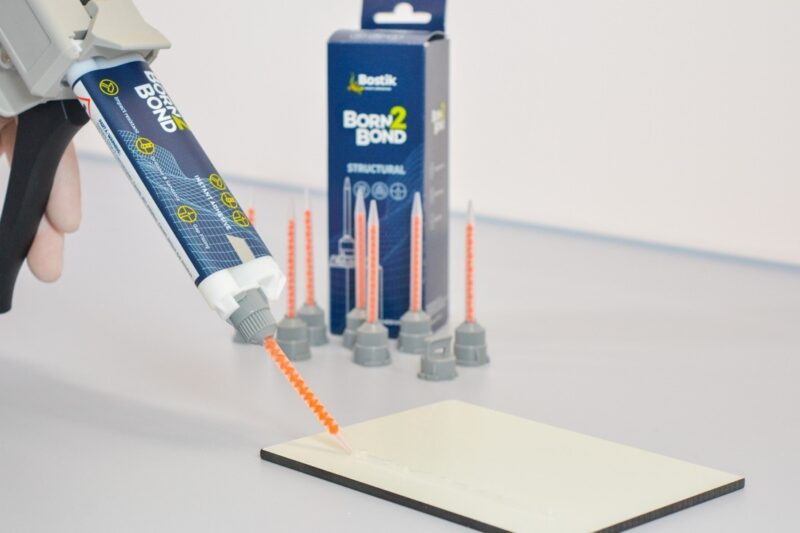
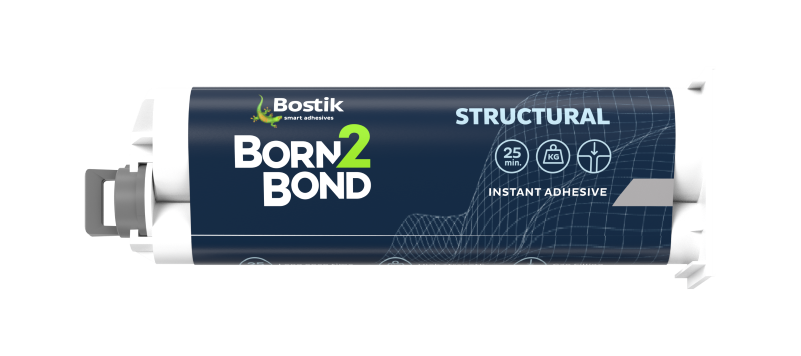
A new cyanoacrylate adhesive offers some relief from these compromises. Born2Bond™ Structural is a high-strength hybrid adhesive which is a blend of ethyl cyanoacrylate and methoxyethyl cyanoacrylate monomers. It provides a fast fixture time at room temperature while maintaining good processability and coping with bond gaps up to 5mm. It offers excellent bonding characteristics to a large variety of non-porous substrates, including aluminium, plastics and elastomers, but also porous substrates, such as wood, chipboard, and leather. The adhesive is a two-part system with a 4:1 mix ratio, supplied in a twin cartridge and dispensed through a static mixing nozzle.
Figure 2 – Born2Bond Structural is supplied in a twin cartridge with static mixing nozzles
What does fast cure mean to your process?
There is a trade-off with two-part structural adhesives – you want fast cure once mixed to minimise long clamping and fixturing times (which can require investment in tooling), and to optimise work in progress (WIP). But that fast cure also means that adhesive starts to gel in the mixing nozzle unless it is dispensed continuously or frequently purged. This can result in high costs for replacement static mixing nozzles, or lots of wasted material.
Fast cure can also limit assembly process flexibility; it means that the working life or open time after mixing and application is short, and that assembly of the parts must happen in a small process window. If the adhesive skins over or cures too much before assembly, then the bond strength can be compromised. Born2Bond Structural has a long mixed open time, and a very short fixture time once the parts are assembled.
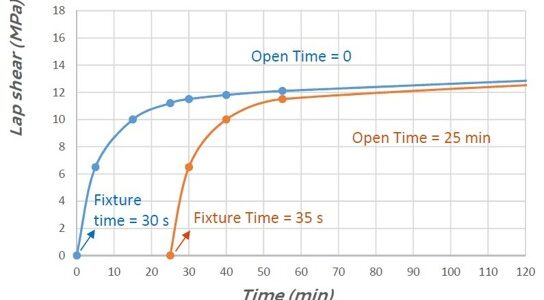
Chart 1 illustrates this unique property. In both cases, Born2Bond Structural was used to bond grit-blasted mild steel. The temperature was ambient.
Chart 1 – Born2Bond Structural adhesive shear strength against time
The blue curve shows the mixed adhesive being dispensed, and the steel laps assembled immediately. Fixturing strength is achieved in 30 seconds, and structural strength in 5 minutes. After 24 hours, a lap shear strength of 18 MPa is reached. The orange curve shows the adhesive being dispensed, but the steel laps are not assembled for 25 minutes. Fixture time is slightly compromised from 30 seconds to 35 seconds, but the bonding profile is otherwise very similar. The 25 minutes when the mixed adhesive is sitting on the part does not hinder the cure nor the effectiveness of the bond. In both cases, cure only starts when the parts are assembled, and the normal “instant” interfacial cyanoacrylate adhesive polymerisation begins, usually a reaction with surface moisture. This quick cure only upon bringing the parts together adds an element of “on demand” to the process.
The benefits for this product include a widened process window between dispensing and assembly, without compromising on cure time. In fact, attaining fixture strength in 30 seconds, although substrate dependent, compares very favourably with any other adhesive, and certainly with the stalwart epoxy and MMA structural products. This time saving reduces WIP, curing fixtures, and space. Working life in the mixer of 25-35 minutes means that static mixing nozzles will need to be replaced much less frequently, reducing downtime, saving money and decreasing plastic use. Some repositioning is possible prior to final assembly, something which is very difficult with traditional CAs.
Performance
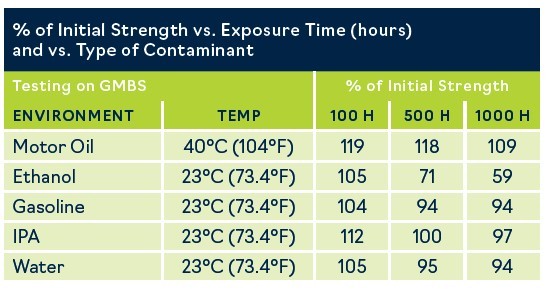
Bonding performance is favourable, and is superior to a traditional cyanoacrylate adhesive. The operating temperature range is -40⁰C up to 120⁰C. Born2Bond Structural has very high impact resistance (27 KJ/m2 steel after 24h), and toughness. It develops structural bonding performance to steel, ABS, PVC, phenolic and polycarbonate, amongst other substrates, and features particularly good adhesion to aluminium (lap shear strength 12 MPa). It has good resistance to oil and petrol, polar solvents, and shows long term resistance to immersion in water.
Chart 2 – Born2Bond Structural chemical resistance, tested on grit-blasted mild steel
Conclusion
New product development always seems to bring more complexity to designs because of increased functionality, and the trend always seems to make things smaller. Born2Bond Structural’s gel viscosity and gap filling capability help with accurate and repeatable application, even to small parts. Multi-substrate adhesion, bond strength and impact resistance, combined with process flexibility and friendliness, make it a suitable candidate for testing in assembly applications in electronics, loudspeakers, automotive, white goods, and any number of industrial applications. Equally, it can be used as a repair adhesive in any of those sectors.
Born2Bond Structural’s unique hybrid two-part formulation produces performance and process advantages which make it a creditable choice for evaluation on a structural adhesive project.