- Products
- Industries
-
-
-
Industries
Browse industry-specific solutions for bonding, coating, and dispensing. Find proven materials and manufacturing technology tailored to your exact requirements.
-
-
-
- Knowledge centre
- News and insights
- About us
-
-
-
About Intertronics
Get a clearer view of the team, facilities and standards behind the technical support offer.
-
-
-
- Contact us
Introduction
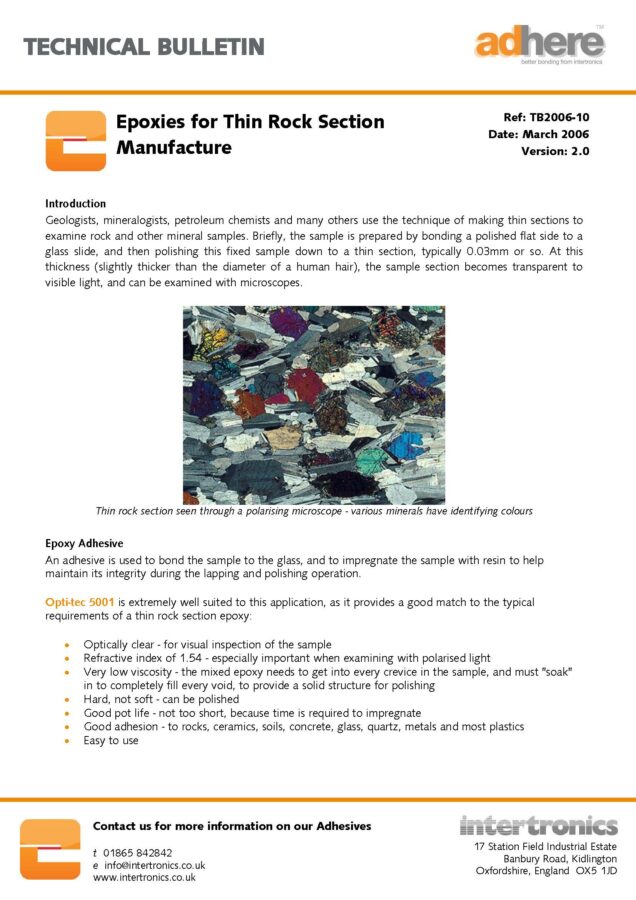
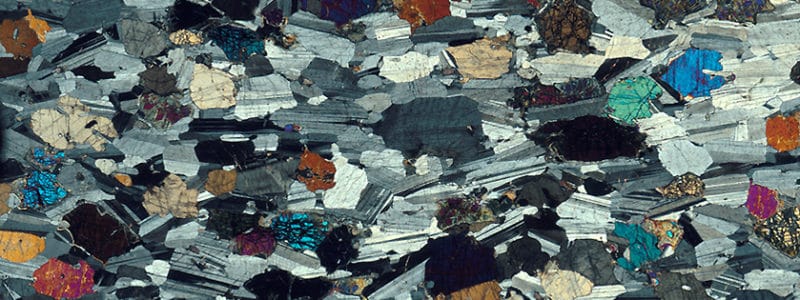
Geologists, mineralogists, petroleum chemists and many others use the technique of making thin sections to examine rock and other mineral samples. Briefly, the sample is prepared by bonding a polished flat side to a glass slide, and then polishing this fixed sample down to a thin section, typically 0.03mm or so. At this thickness (slightly thicker than the diameter of a human hair), the sample section becomes transparent to visible light, and can be examined with microscopes.

Epoxy adhesive
An adhesive is used to bond the sample to the glass, and to impregnate the sample with resin to help maintain its integrity during the lapping and polishing operation.
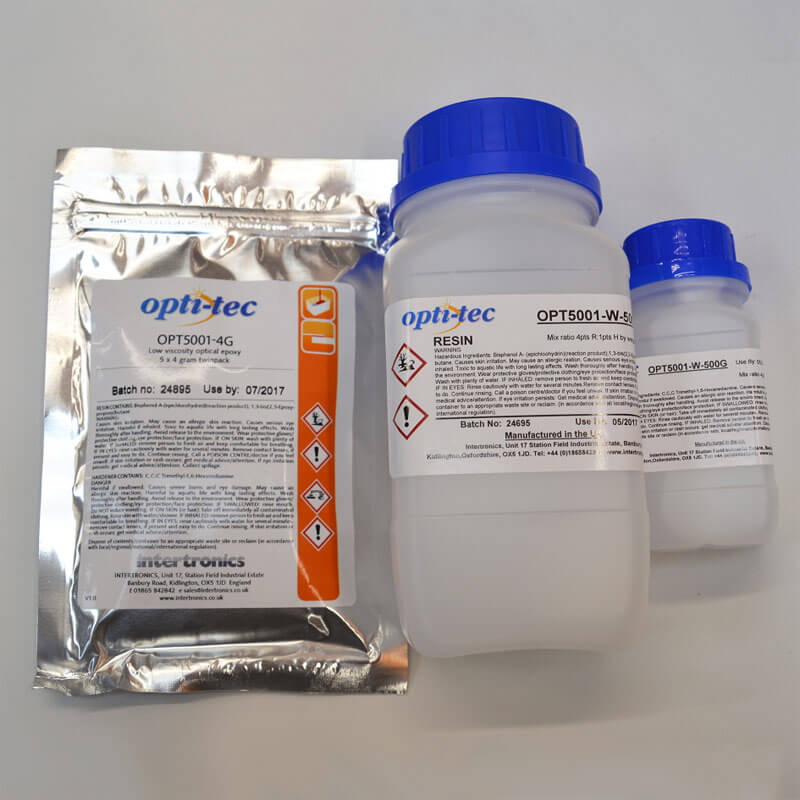
Opti-tec 5001 is extremely well suited to this application, as it provides a good match to the typical requirements of a thin rock section epoxy:
- Optically clear - for visual inspection of the sample
- Refractive index of 1.54 - especially important when examining with polarised light
- Very low viscosity - the mixed epoxy needs to get into every crevice in the sample, and must "soak" in to completely fill every void, to provide a solid structure for polishing
- Hard, not soft - can be polished
- Good pot life - not too short, because time is required to impregnate
- Good adhesion - to rocks, ceramics, soils, concrete, glass, quartz, metals and most plastics
- Easy to use