- Products
- Industries
-
-
-
Industries
Browse industry-specific solutions for bonding, coating, and dispensing. Find proven materials and manufacturing technology tailored to your exact requirements.
-
-
-
- Knowledge centre
- News and insights
- About us
-
-
-
About Intertronics
Get a clearer view of the team, facilities and standards behind the technical support offer.
-
-
-
- Contact us
Customer
Process Instruments (Pi) manufactures and supplies water analyser instrument solutions. Headquartered in the UK, the company has a growing global reputation for innovation, producing reliable, flexible, high-quality water quality analysers that can continuously and accurately measure water quality.
Customer benefits
- Strong bonds and watertight seals to IP68 rating
- Straightforward application from convenient 1:1 cartridge
- Versatile epoxy is used in multiple applications, helping inventory management
- Potential to use the same adhesive in new applications as the company develops its product range
Introduction
As the business has grown, it has designed and manufactured new sensors, building a catalogue of custom sensors designed for different market sectors. The company is continuing to design and develop new products to better serve its customers.
Challenge
During product development, Process Instruments sought a material to stop a PG13 thread unlocking on its flow cells. It required a material that provided high bond strength between two stainless steel surfaces and was high viscosity, flexible, and offered good moisture resistance. The company struggled to find something suitable.
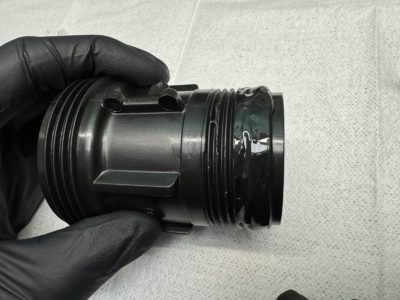
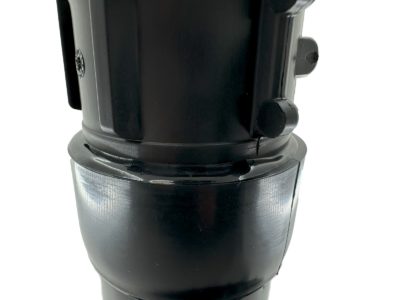
Pi also wanted a way to secure and waterproof the IP-rated seal on the top of its sensors. Because Pi’s sensors go into high submersion applications, they must be totally watertight. Previously, the company relied on O-rings to seal the gland, but was experiencing problems, as well as finding appropriate materials difficult to source in the UK.
Having worked with Intertronics on an earlier project for potting inside a sensor canister, Pi knew the team could help. Pi created a list of applications it needed a material for, and invited Intertronics to suggest a solution.
Paul Whitehead, Strategic Accounts Manager at Intertronics, said:
“We visited the Process Instruments site to look at the applications and narrow down what would give the best results. Process Instruments were keen not to use too many different adhesives, so we identified versatile epoxies that could be used in multiple applications.
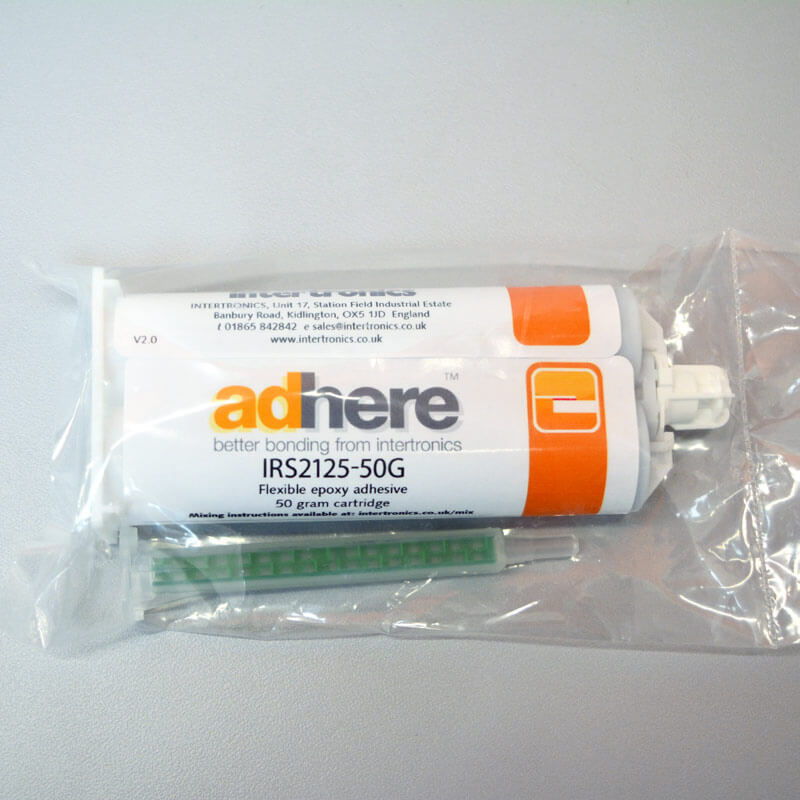
“While IRS 2125 was developed as a cable sealing material, it is used as an adhesive due to its high bond strength. After listening to Process Instruments describe its needs and problems, IRS 2125 appeared to be the optimum solution for both applications.”
IRS 2125 flexible epoxy adhesive is a high performance black resin system. Its combination of good flexibility and strong adhesive strength lends itself to many high technology bonding, sealing, and insulating applications. A two part system with a simple 1:1 mix ratio, it is supplied in convenient side-by-side double syringe cartridges, complete with static mixing nozzles. The material can seal to IP68, continuous immersion, which was important for this application.

Handling and processing
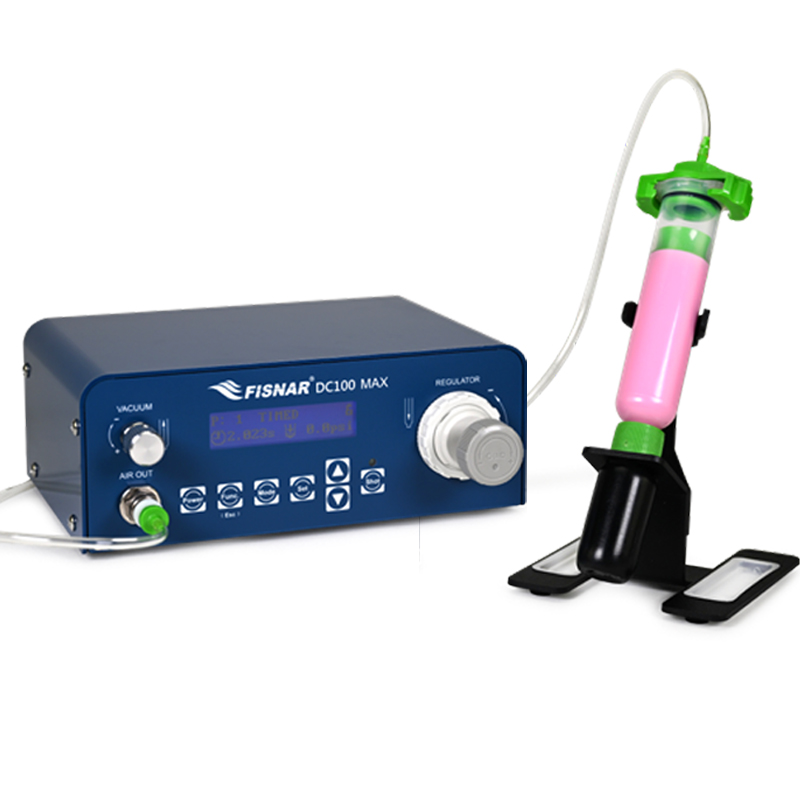
Process Instruments can mix and dispense IRS 2125 directly from a 50 ml cartridge using static mixing nozzles, in combination with the Fisnar DC100 time/pressure dispenser. From each cartridge, the company can produce a full batch of products.
Lewis Todd, Sensor Manufacturing Engineer at Process Instruments, said:
“The material is easy to mix and handle as it is available in a convenient side by side cartridge, and the package size suits our process. Its 90 minute pot life gives us plenty of time to assemble our parts before the material begins curing.”
Better performance
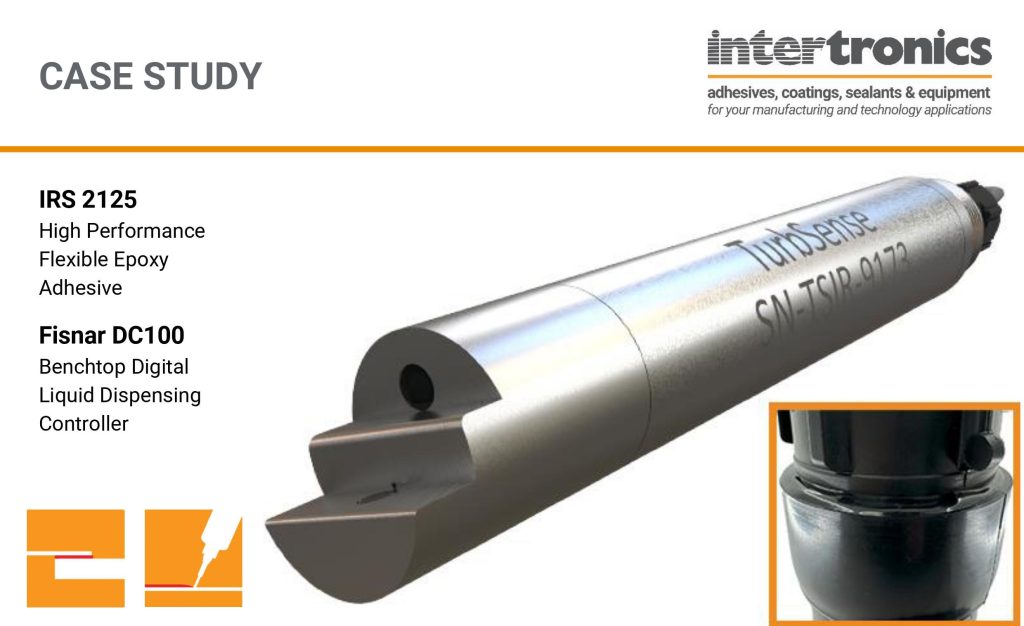
Pi tested IRS 2125 on both the flow cell gland and thread locking application under 10 bar pressure and found better performance with IRS 2125 than previous materials.
Ryan Blacklaws, Product Design Engineer at Process Instruments, said:
“We were really impressed that we could create a watertight seal that we could pressurise to 10 bars, with no O-rings on the gland. IRS 2125 exceeded our expectations and, during our testing, we were unable to break the bond on various materials.
“We’re now using IRS 2125 in three of our sensors and two of our flow cells, and going forward it will be in more products as we expand our range.”
Lewis Todd, Sensor Manufacturing Engineer at Process Instruments, said:
“As well as its impressive range of materials, we’ve really benefitted from the knowledge and expertise of Intertronics’ team, who gave us confidence we were using the right material for the application.
“Working with Intertronics has been a smooth process from the beginning. We’d be keen to work together in the future on relevant applications.”