Browse industry-specific solutions for bonding, coating, and dispensing. Find proven materials and manufacturing technology tailored to your exact requirements.
Functionality of electromagnetic shielding material improved without cutting fibres
Customer
A scientific research team were looking to develop a unique radio wave absorbing wall material for applications in electromagnetically shielded rooms. Their process involved mixing carbon fibres into a wall coating material to prevent the reflection of radio waves.
Customer benefits
Non-contact mixing
Simple to use
Easy clean up
Challenge
The customer said:
“In the past, we have used conventional propeller mixers to mix the carbon fibres into our material. By using blades, however, we found that the carbon fibres were unnecessarily cut into pieces due to the force of the propellers, regardless of how we operated the mixers.
“Failure to maintain the structural integrity of the material decreased its ability to absorb radio waves, making it impossible to achieve the expected performance. We therefore needed to find a mixing method that did not reduce the integrity of the fibres in the material.”
Results
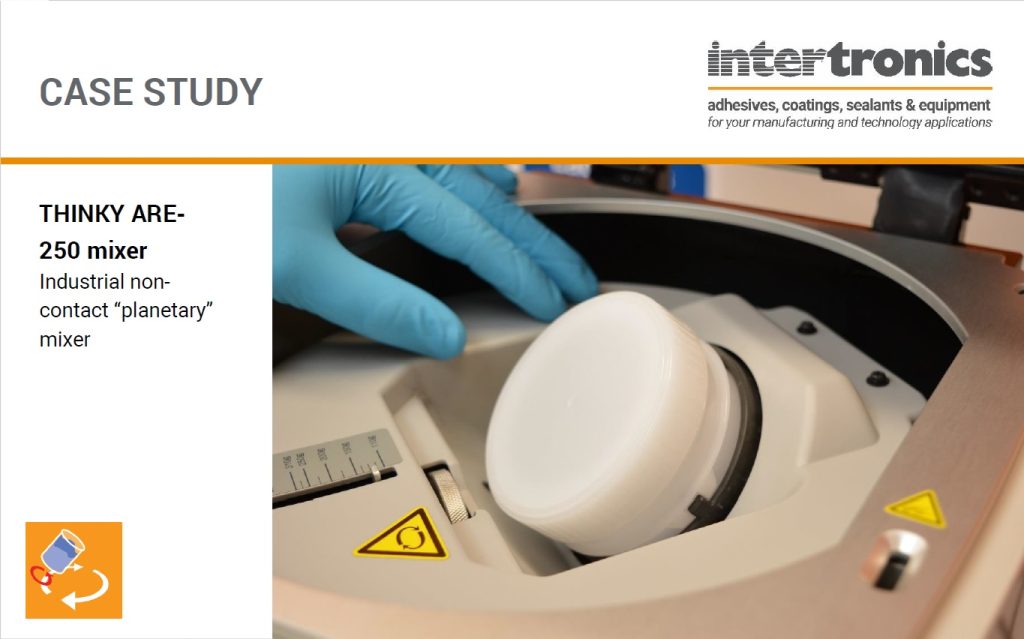
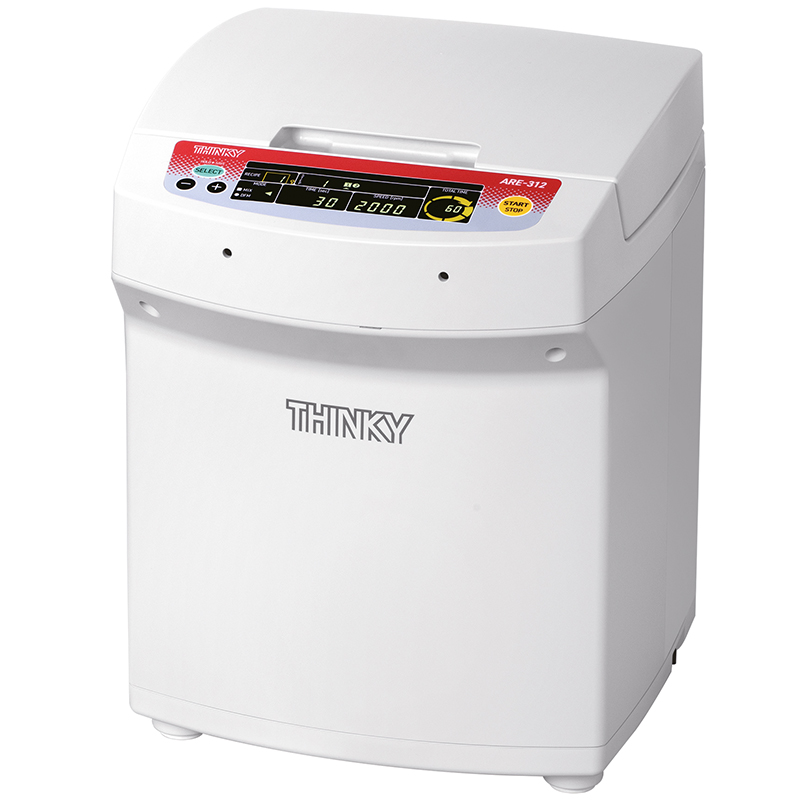
After looking at a variety of mixing options, the customer made contact with THINKY and decided to test the ARE-250 mixing and degassing machine. The unit is an industrial “planetary” mixer which is suited for all engineering compounds. It mixes, disperses and degasses material in seconds to minutes, and is designed to apply a non-contact mixing method which suited the customer’s requirements. By using the THINKY mixer, the research team found that their carbon fibres were no longer cut into pieces whilst mixing.
The customer continued:
“In addition to solving our mixing issue, we were impressed that as the carbon fibres were kept in a closed container while being processed, the fibres did not scatter, reducing potential health risks for our operators.
“During set up, we were given guidance on the ideal mixing conditions by THINKY’s technical staff, and after conducting some fine tuning, found the optimal process for us.”
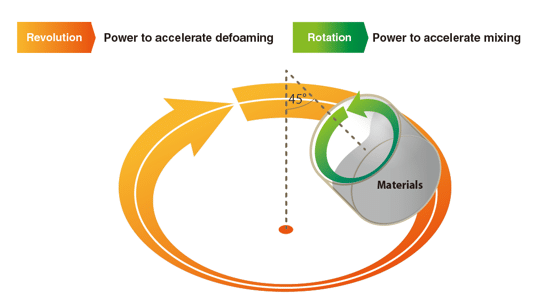
THINKY mixers utilise a planetary mixing action which combines rotation and revolution