When Rotech Systems and Encoders discovered that its existing potting compound was being discontinued, the problem exposed a deeper constraint in its production system. Uncertain material supply had already been limiting output of the rotary encoders and vibration sensors used in harsh mining environments. Without reliable access to encapsulation materials, the company could not confidently increase production to meet growing demand.
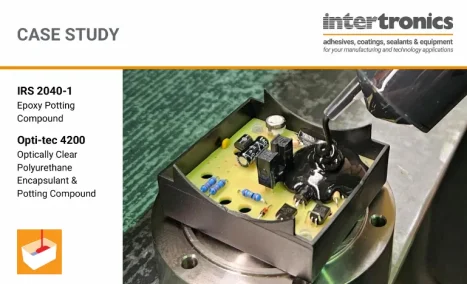 Working with us, Rotech reviewed the application from first principles rather than simply replacing the obsolete epoxy with a direct equivalent. The process focused on the real requirements of the assembly: controlled viscosity for complete encapsulation, flame retardancy for mining environments, and packaging suitable for both manual mixing and future automation. Alongside the material recommendation of IRS2040-1 Epoxy Potting Compound – a good one to consider for harsh environments – the collaboration introduced structured forecasting, scheduled deliveries and practical inventory management.
The result was more than a new potting compound. With dependable supply and improved process planning in place, Rotech was able to expand production and increase annual sales from around 1,500 to 4,000 units.
Rotech Managing Director John Hoey reflected, “You don’t often get a good sales team combined with a good technical team. They’re knowledgeable, the response time is great, and they give me peace of mind. As a manufacturer, that’s invaluable.”
The case shows how material selection, supply reliability and process thinking often sit at the heart of manufacturing growth. With dependable material supply in place, Rotech expanded output and increased annual sales 167%, strengthening its position in the UK and South African mining sectors.
There’s more detail in the full case study – read it here.