Browse industry-specific solutions for bonding, coating, and dispensing. Find proven materials and manufacturing technology tailored to your exact requirements.
What is a medical adhesive? Key properties, use cases, and regulatory considerations
What defines a medical adhesive, including essential attributes, ISO 10993 biocompatibility, curing methods, and compliance in device manufacturing
Introduction
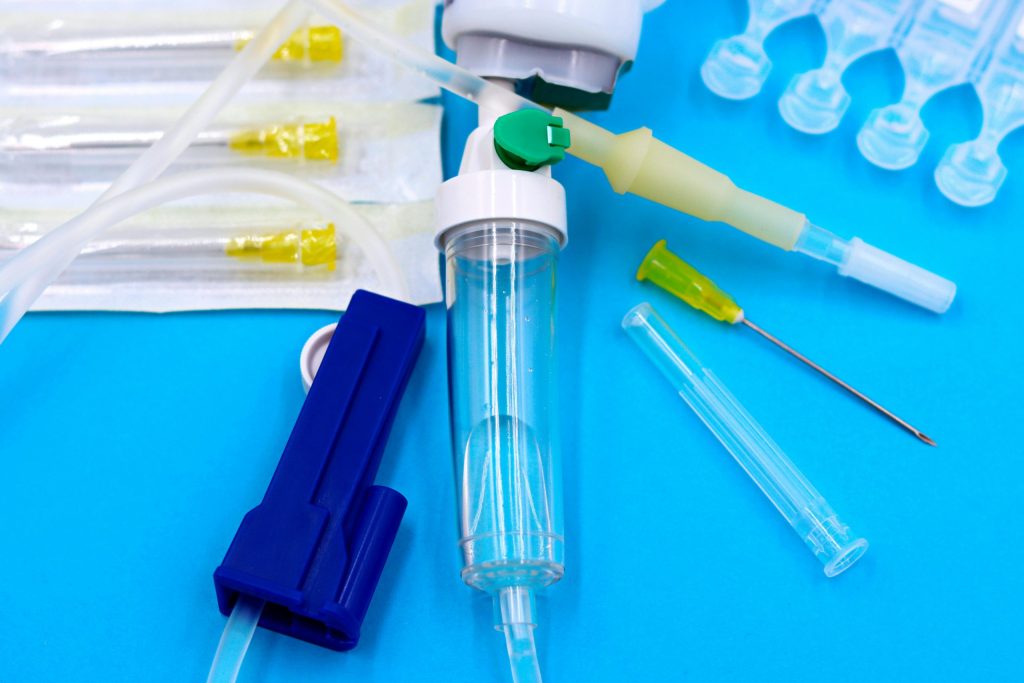
Every year, billions of medical devices are manufactured. The World Health Organisation says that there are an estimated two million different kinds of medical devices on the world market, categorised into more than 7,000 generic device groups. A significant portion are assembled using adhesives such as UV and light curable adhesives, cyanoacrylate adhesives (CAs), and adhesives based on silicone or epoxy chemistries. Devices include syringe needles, catheters, IV sets, diagnostic devices, tubing assemblies — and many more. Adhesive plays a crucial role in ensuring device performance and integrity, patient safety, and regulatory compliance.
So, what defines a medical adhesive?
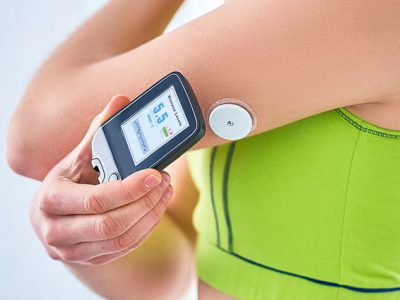
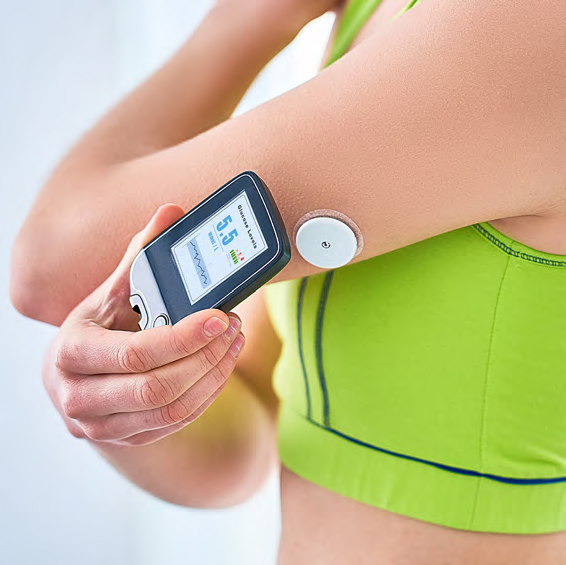
For the purposes of this piece, I am going to leave aside the adhesives which are used therapeutically in or on the human body. Examples include bone cements, wound closure and skin repair adhesives, and surgical sealants which help control organ and vessel leaks. Similarly, I am going to ignore pressure-sensitive adhesives (PSA) which are used very widely for bandages and plasters, securing wearable medical devices to skin, and surgical drapes. PSAs also have roles in structural bonding, e.g. the lamination of layers in biosensors or electrodes. Both these categories of medical adhesives have innumerable important applications.
Figure 1 – This paper focuses on adhesives to assemble the device itself, not the adhesives which secure it to the patient
Key characteristics of medical-grade adhesives
I am going to focus on adhesives for the bonding of medical devices, and those adhesives which give structural integrity to the assembly. Here are the main properties which define this category.
Adhesion
Biocompatibility
Sterilisation
Compliance
Patient contact duration
Process validation and QA
Adhesion
The primary function of an adhesive is to bond two surfaces together. Medical devices are made from many kinds of materials and substrates – some common, with plastics like polycarbonate (PC), ABS and PMMA, metals like stainless steel and titanium, glass, and various elastomers used frequently.
Other substrates are more specialised but also used routinely. Examples include:
Nitinol: nickel-titanium alloy used in stents and guidewires
PEBA: thermoplastic elastomer known for its flexibility and chemical resistance, commonly used in catheters and tubing
PEEK (polyether ether ketone): semicrystalline thermoplastic with excellent mechanical and chemical resistance properties that are retained at high temperatures
TPUs (thermoplastic polyurethanes): used in catheters and flexible surgical device parts
COP/COC (cyclic olefin polymers/copolymers): used in Lab-on-a-chip (microfluidic) cartridges, optical biosensors, drug delivery systems
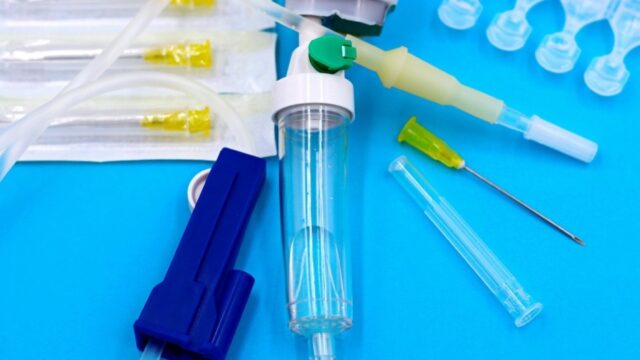
A medical device adhesive must bond with sufficient structural strength to the substrates, even if there are multiple and dissimilar types in a bondline. Adhesion may be difficult, due to factors like the material’s low surface energy, or just the unique combination of the substrates. Adhesive formulations are available which can develop adhesion to the particular materials used in medical device assembly, and these tend to be specific to this market segment. Nevertheless, surface preparation like plasma treatment or primers may be required to achieve optimal adhesion.
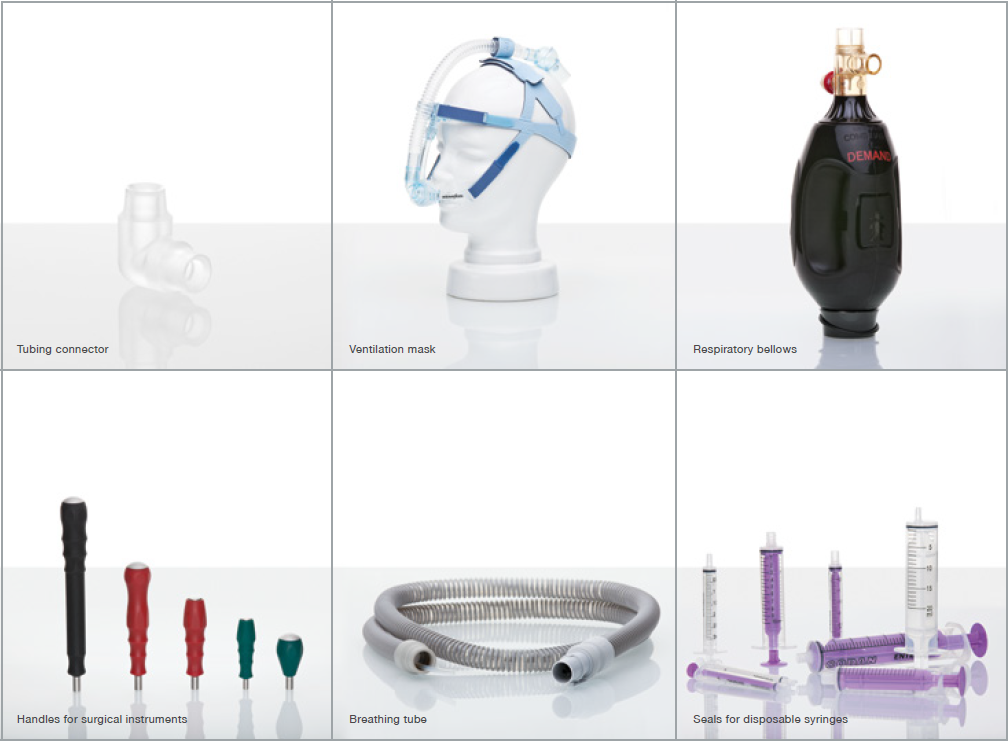
Figure 2 – Bonds in medical devices may have unique combinations of substrates or materials which are specific to the segment
Biocompatibility and ISO 10993 testing
ISO 10993 is a multi-part international standard for the biological evaluation of medical devices. It provides a framework to assess the biocompatibility of materials that will contact the human body. Whilst the finished medical device must be tested to ISO 10993, component-level testing (including adhesives) helps reduce the test burden and can accelerate the submission process, helps with patient risk management, and enhances traceability and technical file creation. It is one less thing to worry about when submitting the completed device for biocompatibility testing.
The specification of adhesives which have already passed ISO tests adds efficiency to the process, as the manufacturer doesn’t need to wait for test results of their own evaluations. If an adhesive fails, then ameliorating this may mean changing an adhesive mid-project, with all the attendant paperwork and revalidation. Choosing a pre-tested medical-grade adhesive enables R&D and regulatory teams to move forward in parallel, improving development timelines.
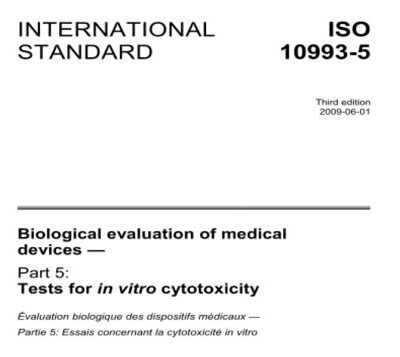
As a minimum, medical device adhesives should be tested under ISO 10993-5, Tests for in vitro cytotoxicity. Typically, the fully cured adhesive is extracted with a cell culture medium, and this extract is added to lab-grown cells, along with negative and positive controls. After incubation, the cells are examined under a microscope for changes or damage indicative of cytotoxicity. The evaluation is usually qualitative or semi-quantitative, based on specified scoring criteria.
Figure 3 – ISO 10993-5, Tests for in vitro cytotoxicity is the minimum testing regime for a medical device adhesive
Cytotoxicity is the first and most essential check of whether the adhesive could damage or kill living tissue at the cellular level. ISO 10993-5 provides a fast, reliable and sensitive screening tool which is widely accepted by regulators as the baseline biocompatibility test.
Other ISO 10993 tests may be desirable to assess risk. For example, if you are specifying an adhesive for a wearable medical device, then a successful result under ISO 10993-10 Tests for irritation and skin sensitization would be useful. Taking a risk-based approach to ISO 10993 test requirements helps reduced unnecessary testing on animals.
ISO 10993
Part Focus
Relevance
10993-5
In vitro cytotoxicity
Essential for all adhesives
10993-10
Skin irritation/sensitisation
Important for wearables
10993-11
Systemic toxicity
Needed for longer-term contact
Table 1: ISO 10993 tests and their relevance to adhesives
Biocompatibility and complete cure
It is important to know that most medical device adhesives will not pass the cytotoxicity testing unless fully cured. The reason is that uncured or partially cured adhesives may contain residual monomers, initiators, or other reactive chemicals that can be cytotoxic to cells. Cure validation (degree of cure, under real-use conditions) is therefore critical.
CAs and silicone-based adhesives may fail to cure completely prior to test if the ambient relative humidity is too high or too low, or they are in very thick section – cure can be disrupted in these circumstances. You could assume that two-part epoxies, if mixed properly and in the correct ratio, would cure adequately, but post-cure thermal treatment is sometimes applied to improve cure completeness.
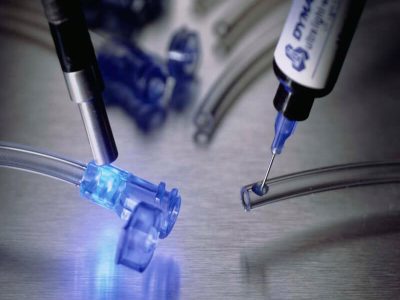
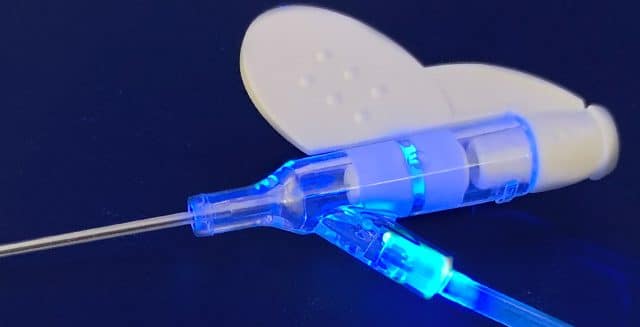
Light cure adhesives (or those hybrid types cured with a combination of light and heat, or light and moisture) will achieve complete cure if exposed to a sufficient dose of light of the correct wavelength(s). By “dose” I mean a combination of intensity (power) and time. If the bondline design includes areas which are shadowed from the curing light, then they need special attention to ensure they reach full cure by some other cure mechanism.
You will need to establish a production process which successfully manages the variables affecting complete adhesive cure to ensure biocompatibility, as well as the other aspects of required adhesive performance.
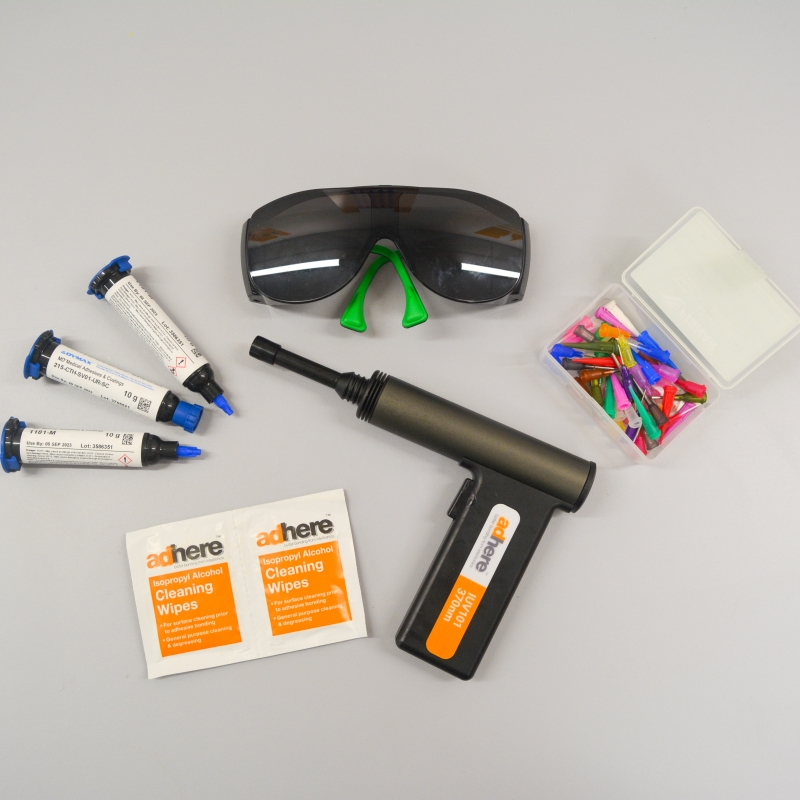
Figure 4 –Light curing medical device adhesives offer fast processing and curing
Medical adhesive compatibility with sterilisation methods
Most medical devices which have been assembled using adhesives will undergo a sterilisation process. Examples of products which might not need sterilisation include non-invasive wearable medical devices—such as skin-worn sensors, patches, or monitoring devices. These do need to pass biocompatibility tests, however.
Sterilisation methods for the majority of medical devices include radiation, temperature and gas – the most popular methods are:
ethylene oxide gas (EtO)—used in over half of the applications
gamma radiation
steam autoclave
e-Beam radiation
In EtO sterilisation, medical devices are placed in a sealed chamber where they are exposed to ethylene oxide gas under controlled temperature, humidity, and vacuum conditions, allowing the gas to penetrate deeply and destroy microbial DNA. EtO is safe for most common medical device substrates (plastics, rubbers, metals, textiles, electronics). But not all materials, including adhesives, are fully compatible and some may absorb the gas, or degrade or change properties.
Gamma radiation sterilisation uses high-energy gamma rays, typically from a Cobalt-60 source, to penetrate medical device packaging and materials, breaking down microbial DNA and effectively killing bacteria, viruses, and spores. It is a cold process suitable for many heat-sensitive materials. Gamma radiation can affect some adhesives (e.g. discolouration, embrittlement).
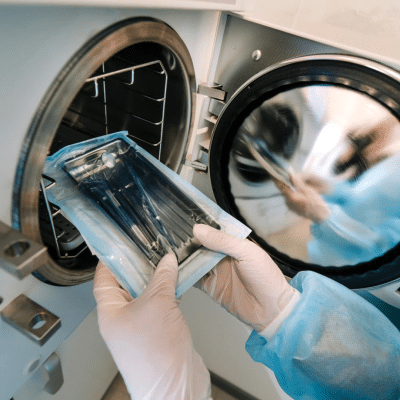
Autoclaving, or steam sterilisation, involves placing items inside a sealed chamber, then exposing them to steam at typically 120°C-135°C. It is highly effective, but does require the materials to be both heat- and moisture-stable. Temperature and humidity are an adhesives’ sworn enemies, and together they present a big challenge — which only a few specialised products can withstand, especially if the device is to be repeatedly autoclaved (i.e. dental and surgical instruments, endoscopes).
Always validate adhesive sterilisation compatibility during device design.
Figure 5 – Autoclaving or steam sterilisation is a very challenging process for an adhesive to withstand
Regulatory environment
Medical device manufacturing is one of the most highly regulated industries in the world. In the UK, the Medicines and Healthcare products Regulatory Agency (MHRA) is the central authority responsible for ensuring the safety, efficacy, and quality of medical devices placed on the UK market, but most manufacturers will want to comply with the US Food and Drug Administration (FDA), and the European Medicines Agency (EMA) as well. Manufacturers and suppliers of medical adhesives must be able to meet obligations around traceability, supply chain and quality documentation, test certification and quality systems to support a device manufacturer’s conformity assessment process.
Implantation and contact duration
ISO 10993 and guidance from the FDA define the time that a medical device is in contact with a human as:
The longer an adhesive remains in contact with the body, the greater the potential for adverse biological effects. For example, an adhesive used in an implantable device would require more extensive testing than a limited-use adhesive for a wound dressing. A manufacturer would need to do a more extensive biological risk assessment for a device designed for permanent contact.
For a number of reasons, including reducing liability, the technical data sheets (TDS) and regulatory documentation for medical device adhesives often explicitly state “not for implantable use” or “not for permanent contact”.
Process validation and quality assurance
Robust, repeatable processes are essential in medical device manufacturing — having a validated, documented process which proves that you consistently produce product that meets the specifications is mandatory.
Adhesives, and the respective application and curing systems, which make the validation easier are not a necessary characteristic which defines a medical adhesive, but are intrinsically important for most new applications and material selection.
Features that enhance process validation:
Fast, predictable cure profiles
Single-component (1K) formulas – no mixing errors
Visual indicators of quantity and positioning (fluorescence) and cure
Curing with low energy at room temperature
Choice of viscosity for application accuracy and consistency
They help streamline process development and reduce the number of critical process parameters.
Figure 6 – A bond on this device is made with a light curing adhesive which has a strong red fluorescence to assist with inspection
Conclusion
Medical assembly is high precision, high compliance, and high consequence. The pressure to get it right the first time is enormous. Mistakes in medical device bonding aren’t just product selection or process errors — they can lead to product recalls, regulatory violations, or worse: patient harm.
You can mitigate your risk by working with a supplier who has specialist products, can advise you on your adhesive evaluation and selection, and can help you establish a bonding process which you can validate and rely on.