Adhesives for medical wearables: a guide

Introduction

Wearable medical devices are one of the fastest-developing areas of healthcare technology, with the European market alone expected to grow from £8.7 billion to £28.5 billion by 2033, per a November 2025 report1. Breakthroughs range from custom 3D-printed prosthetic body parts to wireless, continuously monitoring cardiac telemetry. These devices are becoming smaller, more complex, and more integrated into everyday life, bringing new challenges for materials engineers and MedTech manufacturers. This guide will explore considerations for the adhesive systems that hold these devices together and play an important role in their functionality and safety.

What is this guide for?

There are quite a few options for adhesives and sealants to use in wearable medical technology. If you are an engineer tasked with designing a new device, or an engineer looking to establish a bonding or coating process, then reading this will help you narrow your choice for evaluation. It is still imperative that you undertake a full evaluation of your candidates on production parts.

We’ll focus here on adhesives used to bond and assemble wearable medical devices, for example, diagnostic patches, glucose or electrocardiogram (ECG) monitors, and therapeutic delivery systems. We’ll leave pressure-sensitive adhesives (PSAs) that attach devices directly to the skin to one side.

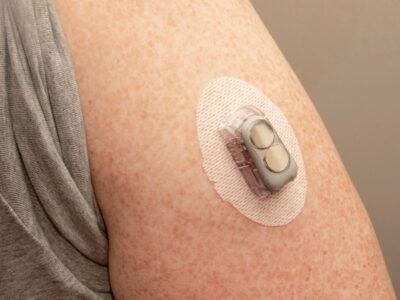
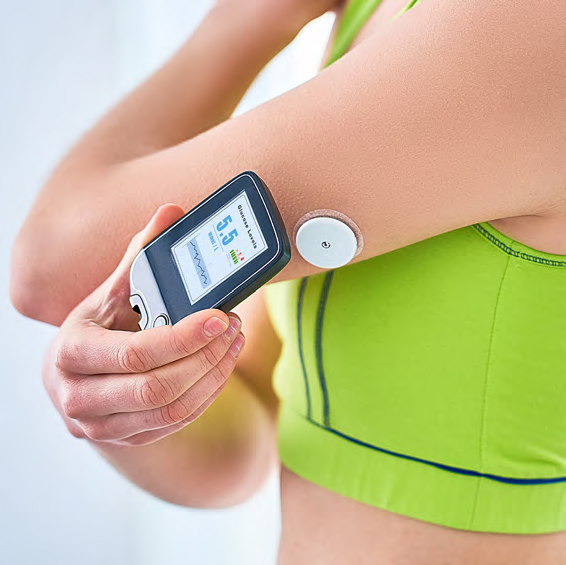
Medical device adhesives can be used to bond components within glucose or electrocardiogram (ECG) monitors
Figure 1 – Medical device adhesives can be used to bond components within glucose or electrocardiogram (ECG) monitors

Wearable devices live in a tricky, messy environment: constant motion, complex geometry, multiple substrate types, moisture, skin oils, and so on. Adhesives have to handle:

  • Soft, compliant substrates like TPU, TPE, silicones
  • Thermal and mechanical cycling from body heat and movement
  • Biocompatibility expectations (typically ISO 10993 parts relevant to skin contact)
  • Aesthetics (no blooming, no yellowing, no odour)

What are the key factors that influence adhesive choice?

  1. Adhesion requirements
  2. Biocompatibility
  3. Regulatory requirements
  4. Adhesive type
  5. Process considerations
  6. Lessons from real-world cases

For manufacturers, adhesive selection brings together the strands of material performance, processability, patient safety, and regulatory compliance. The right adhesive must reliably bond dissimilar materials such as thermoplastic polymers, metals, and flexible films to withstand repeated mechanical and environmental stresses, and support processes that are scalable and reproducible.

You’ll need adhesives that meet biocompatibility standards and avoid components that could cause adverse skin reactions or regulatory complications. For example, isobornyl acrylate (IBOA) is an acrylic monomer known to cause contact dermatitis in sensitive users. While the adhesives used in device assembly may not be in direct contact with the skin, manufacturers are increasingly seeking materials which are free of IBOA or potentially suspect materials to mitigate dermatological risks.

Adhesive requirements for wearable medical devices

Adhesion to diverse substrates

Wearable medical devices typically combine multiple materials: plastics such as polycarbonate (PC), thermoplastic polyurethane (TPU), and polyimide (PI); high-performance polymers such as cyclic olefin copolymer (COC) and polyether block amide (PEBA); and metals like stainless steel, aluminium or titanium. Each presents distinct surface energy characteristics and bonding behaviours for you to consider.

Adhesives must provide robust adhesion even where bond gaps and surface finishes differ. For example, bonding flexible polymers to rigid housings introduces stresses during use that can weaken or delaminate the joint if the adhesive lacks sufficient flexibility or toughness.

Biocompatibility and durability under wear conditions

Even when the adhesive itself is encapsulated within the device and unlikely to contact the patient, we must ensure that it will not compromise patient safety through leachable substances or incomplete cure. Engineers should start by identifying how and where your adhesive will contact the body: directly, indirectly, or not at all.

While not every device requires testing to each clause of every relevant standard, manufacturers are increasingly adopting a risk-based approach that considers both the likelihood and potential impact of exposure. That means making biological safety decisions with a structural review of the risks associated with particular materials, intended use, and design.

The European Biomedical Institute2 describes the benefits of this strategy, explaining that “the traditional approach of performing a full battery of biocompatibility tests for every new device iteration is no longer sustainable” and “adopting a risk-based approach can significantly reduce the time and cost associated with market access while maintaining regulatory compliance and scientific credibility.”

Your adhesive must withstand daily use and trials such as mechanical stress, sweat, UV, and temperature cycles. Full cure is critical: incomplete polymerisation can compromise both bond strength and biocompatibility. When evaluating options, consider substrate compatibility and expected wear conditions, and validate with representative samples early.

Regulatory landscape

Medical technology is a tightly scrutinised industry, with good reason. In March 2025, Dexcom received Food and Drug Administration (FDA) warning letters3 for cGMP violations, causing nearly 20 per cent stock decline, which illustrates regulatory risk.

When you’re choosing adhesives for a wearable device, regulatory and biocompatibility factors are inseparable. Start by asking: will the adhesive contact the patient directly, indirectly, or not at all? This drives which ISO 10993 tests are needed — for cytotoxicity (ISO 10993-55), irritation (ISO 10993-10), or sensitisation (ISO 10993-23). Conducting these tests at the component level, rather than waiting until the final device, can save time and reduce risk during submission.

Adhesive suppliers working in the medical sector need to operate with the same discipline as their customers in device manufacturing. That means full traceability of materials, documented quality controls, test certifications, and batch records that help device makers build their technical files and prove conformity.

The takeaway is to pick adhesives that are already compliant where possible and make regulatory considerations a factor before you finalise your design. To learn about regulatory considerations for medical adhesives more broadly, read our white paper What is a medical adhesive?4

Process validation as a regulatory and safety strategy

Validation of the adhesive bonding process is both a regulatory expectation and a risk management measure. By providing data points from process validation, you create documented evidence that adhesive application, curing, and bonding reliably produce assemblies that meet pre-defined quality attributes.

In practice, this means controlling Critical Process Parameters (CPPs), such as dispense volume, surface cleanliness, curing energy, or environmental conditions, to ensure Critical Quality Attributes (CQAs) like bond strength and cure completeness remain within specification.


Choosing the right adhesive type

Selecting an adhesive for wearable medical device assembly requires matching the chemistry and cure mechanism to both the substrates being bonded and the manufacturing process. Understanding the characteristics of the main adhesive classes helps you make informed decisions early in the design process, when changes are still practical and cost-effective. All of these chemistries have products which have been tested to one or more of the ISO 10993 regimes. Note that it is common for low temperature curing to be mandated to protect components like sensors and batteries.

UV curing adhesives

UV curing adhesives are single-part materials that harden within seconds when they are exposed to UV or visible light. They provide fast cycle times and good process control because curing begins only when light is applied. These adhesives are available in a range of viscosities and cured mechanical properties, including grades that offer some flexibility for assemblies that experience limited movement. Curing lamps based on UV LEDs have improved consistency by delivering stable, narrow-band light with reduced heat generation compared to traditional broadband mercury lamps. The main limitation is that the entire bond line must receive sufficient light, which restricts the use of these materials in opaque or heavily shadowed joints. Many UV curing adhesives have been tested to selected ISO 10993 regimes.

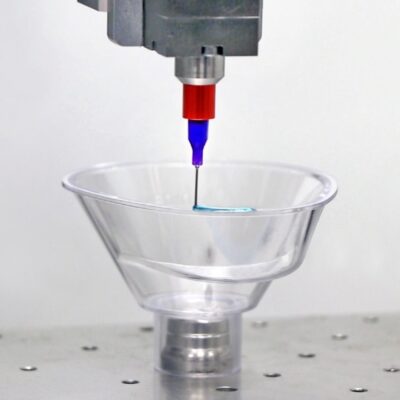
Single-part UV adhesive being dispensed prior to light curing
Figure 2 – Single-part UV adhesive being dispensed prior to light curing

Cyanoacrylate adhesives

Cyanoacrylate adhesives are single-part formulations that cure rapidly in the presence of surface moisture. They work best in thin bond lines and interfacial joints, and they do not require any mixing or external energy to initiate curing. Earlier generations of cyanoacrylates had limitations, including reduced performance under humidity or elevated temperatures, lower peel resistance, and the tendency to form visible blooming or frosting around the joint. Modern materials address many of these issues through improved base chemistries, toughened formulations, and hybrid CA/UV systems that allow the exposed adhesive outside the bond line to cure quickly under light. Selected medical-grade cyanoacrylates have passed ISO 10993 testing.

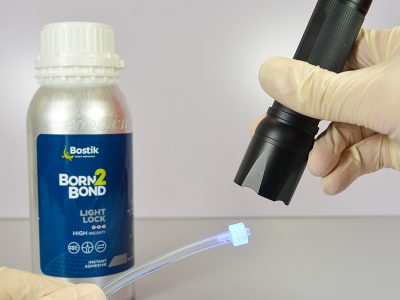
Born2Bond Light Lock Medical Device
Figure 3 – Hybrid CA/UV systems allow exposed adhesive outside the bondline to be cured quickly


Epoxy adhesives

Epoxy adhesives provide high mechanical strength along with very good temperature, chemical, and solvent resistance. They bond metals, ceramics, glass, and many rigid polymers effectively, making them suitable for structural features within wearable devices where movement is minimal. Most epoxies are supplied as two-part systems that require accurate metering and mixing, although pre-mixed and frozen packaging can remove the need for on-site mixing. One-part epoxies are also available but typically require elevated temperatures to cure. Electrically conductive epoxy formulations that have been tested to selected ISO 10993 parts are available for use in medical assemblies.

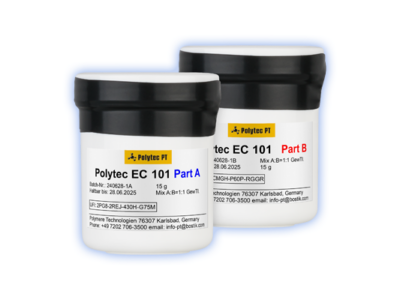
Figure 4 – Two part electrically conductive epoxies are available which have passed ISO 10993 testing

Silicone adhesives

Silicone adhesives offer high flexibility, good temperature stability, and strong performance under environmental cycling. For structural bonding in wearable devices, the relevant products are single-part, room-temperature-vulcanising moisture-cure silicones. These materials are particularly effective for bonding silicone substrates and for applications that require long-term flexibility or stress relief. Their ultimate strength is lower than that of epoxies or acrylates, but their fatigue resistance often makes them the most durable choice for assemblies that bend or flex repeatedly. Several RTV silicone adhesives are available with ISO 10993 test data.

Polyurethane adhesives

Polyurethane adhesives include two-part and moisture-curing systems that provide toughness, moderate flexibility, and good adhesion to engineering plastics such as TPU and TPE, which are common in wearable devices. They occupy a middle ground between silicones and epoxies by offering higher strength than silicones while still tolerating some movement in the joint. ISO 10993-tested polyurethane materials do exist, although they are less widely available than tested silicones, epoxies, or UV curing adhesives. Biocompatibility therefore needs to be confirmed at the individual product level rather than assumed for the entire chemistry.

Matching adhesive chemistry to the assembly process

Beyond substrate compatibility, you must consider downstream processing requirements. Will your planned sterilisation method affect bond strength or release contaminants?

Furthermore, what equipment needs are you creating? Evaluating your total process impact, not just adhesive cost, at this early stage could save you immense time and money later on.

Process considerations for adhesive bonding

When it comes to the bonding process, you’ll need oversight on the variables that affect adhesive performance to achieve reliable bonds and meet regulatory expectations under the ISO and FDA standards. This section discusses process considerations for the adhesive types described above. For a more in-depth review of process validation and the regulatory requirements in medical device manufacturing, read our white paper on Process Validation in Medical Device Bonding: Controlling Variables5

Key process variables

  1. Curing method: For UV adhesives, ensure the energy dose is sufficient for complete polymerisation across the bond. For heat-curing adhesives, reach the specified temperature throughout the part. For cyanoacrylate adhesives, maintain consistent humidity for predictable cure.
  2. Dispense and positioning: Accurate adhesive volume and precise placement prevent starved joints or overflow into sensitive areas.
  3. Surface preparation: Cleaning and treatments like plasma or corona improve adhesion, particularly on low-energy plastics such as PE and PP.
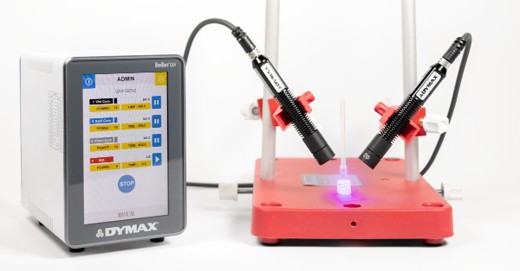
Dymax QX4 2.0 with 2 wands curing tubeset
Figure 5 – UV light curing adhesives cure in seconds when exposed to light of the correct wavelength, and UV LED based curing lamps are becoming the default

Case study: overcoming bonding challenges in wearable devices

We can look to real-world examples of wearable medical device bonding to learn from the challenges faced and solutions found, and for a model of adhesive selection and process control.

Born2Bond and navigating low surface energy

A wearable electronic device manufacturer was using a cured silicone material for a fitness tracking component. Silicone fulfilled skin contact requirements, such as biocompatibility, sweat and odour resistance, but its low surface energy made bonding to polycarbonate seemingly impossible. The adhesive also needed to work well in a very small, precise, and fast manual application step to fit into its production line process.

After repeated failures with a range of structural adhesive technologies, the manufacturer was close to abandoning the design. Following further trials, a combination of Bostik Born2Bond Ultra HV cyanoacrylate adhesive and a compatible primer delivered significantly better adhesion than any previous approach.

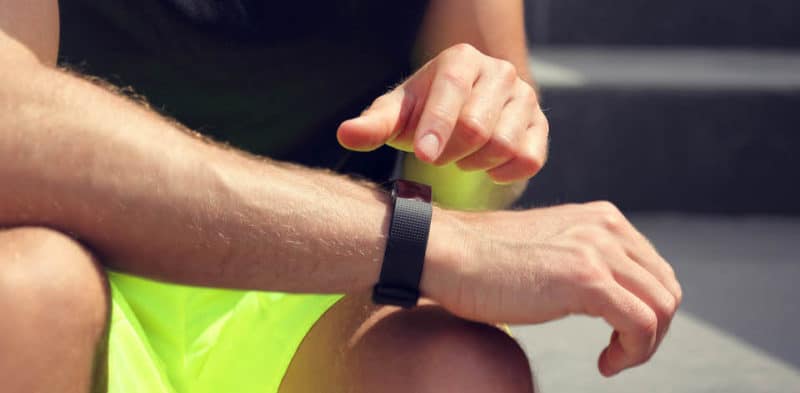
Born2Bond Wearable Application using B2B Ultra
Figure 6 –Born2Bond Ultra HV adhesive and primer is used to bond wearable fitness trackers

In this application, the Born2Bond primer created a reactive interface on the silicone surface that allowed the cyanoacrylate to anchor effectively, overcoming the inherent bonding challenges associated with silicone substrates. Ultimately, production capacity increased due to the adhesive’s 15-second fixture time, overall product aesthetics improved due to the ability to control adhesive application and the product entered the market without requiring the company to invest in new equipment or add new manufacturing space.

Lessons learned

This case reveals several principles that you can action when pondering adhesive selection for your next wearable medical product.

  • Testing on the actual substrates under real production conditions is non-negotiable.
  • It is important to balance bond strength with process compatibility. An adhesive that looks ideal on paper may turn out to be unworkable if it requires new equipment, long cure times, or environmental conditions that the existing production line cannot easily provide.
  • Addressing low surface energy substrates early in the design process opens up a wider range of viable adhesive options.
  • Fixture time and handling characteristics directly impact production economics. Process benefits translate into measurable cost savings and faster time to market.

How to approach adhesives for wearable medical devices

Adhesive selection for wearable medical devices requires balancing mechanical performance, biocompatibility, regulatory compliance, and manufacturing practicality. The principles outlined in this guide provide a framework for making informed decisions that support both device reliability and regulatory approval. Adhering to them helps manufacturers to produce safe and reliable devices that meet the expectations of regulators and patients alike

Checklist for engineers:

  • Integrate adhesive choice early in the design process.
  • Align adhesive choice with substrate, regulatory, and biocompatibility requirements.
  • Understand and control process variables.

References

  1. “Europe’s Wearable Medical Devices Market 2025-2033: Trends, Prospects, SWOT & Value Chain Analysis, Strategic Insights” – Research and Markets, Yahoo! Finance, 5 November 2025
  2. “Why a Risk-Based Approach to Biocompatibility Saves You Time and Money” – European Biomedical Institute, 2nd June 2025
  3. “Dexcom cited for cGMP violations” – Ferdous Al-Faruque, Regulatory Focus, 25th March 2025

Last updated: 20 November 2025

Version: 1.0

Reference number: wp25-10

Download

Download a printable copy of this resource.